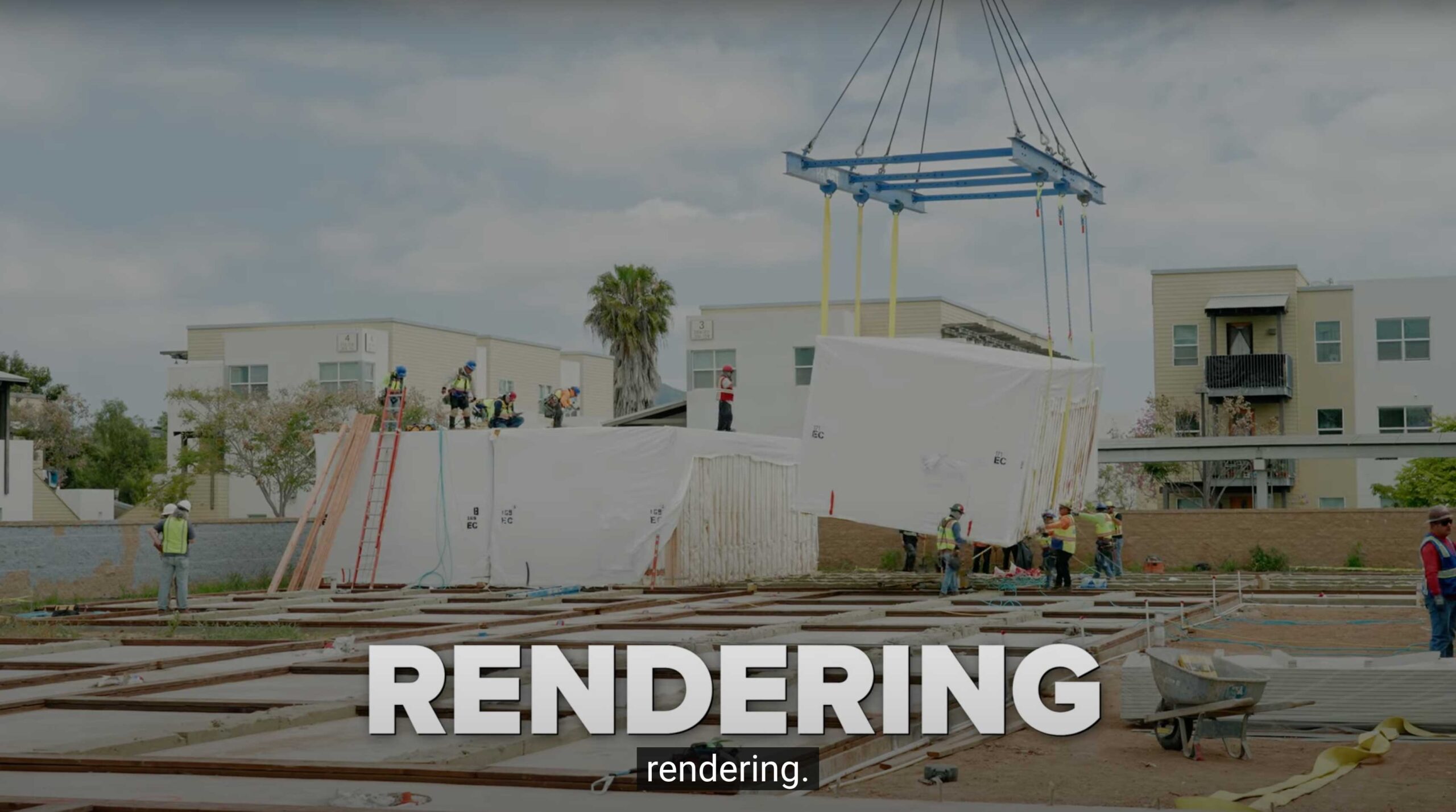
Have you ever watched a crane lift a modular building component and noticed that one end was tilted slightly higher than the other? If you’re not familiar with construction techniques, you might assume this was a mistake or that the module was improperly balanced. This, however, is an intentional technique known as “rendering” in modular construction. In the following video and article, we explain how we use this strategy when setting modules at the build site and why it’s important to do so.
Rendering in modular construction refers to the deliberate tilting of a module during the crane lifting process, where one end is positioned slightly higher than the other. This technique might seem counterintuitive at first glance, but it plays a vital role in achieving precise module placement and connection.
The primary purpose of rendering is to ensure accurate module placement and optimal connection between adjoining modules. While it’s possible to lift and set some modules in a perfectly level position, the situation becomes more complex when modules need to be mated together.
When two modules need to be connected, attempting to set them while perfectly level presents a significant challenge. The chances of achieving a perfect, snug fit between modules when both are level during placement are surprisingly low. This is where rendering comes into play.
The process works by allowing the lower end of the tilted module to make contact with the installation point first. As the crane continues to lower the module, the higher end gradually descends, naturally guiding the module into position against its adjoining counterpart. This controlled descent creates a more precise and tighter connection between modules than would be possible with a level lift.
Rendering offers several advantages in modular construction:
Rendering is particularly valuable in situations where precise module mating is essential. This includes:
While rendering might appear unusual to those unfamiliar with modular construction, it’s these seemingly small but significant details that contribute to the success of modular building projects and the advancement of construction technology as a whole. By understanding and properly implementing rendering, construction teams can achieve better results in modular building assembly, ensuring both efficiency and structural integrity in their projects.
Understanding techniques that are specific to modular construction is crucial when completing a project. That’s why at Stream Modular we focus solely on the modular construction industry. Our specialization means we’re intimately familiar with the specific requirements, challenges, and solutions unique to modular projects. From rendering techniques to complex logistics planning, our team understands the intricate details that make modular construction successful. Contact us to learn more about rendering and other crucial aspects of modular construction.
Read more:
Share this Article     |