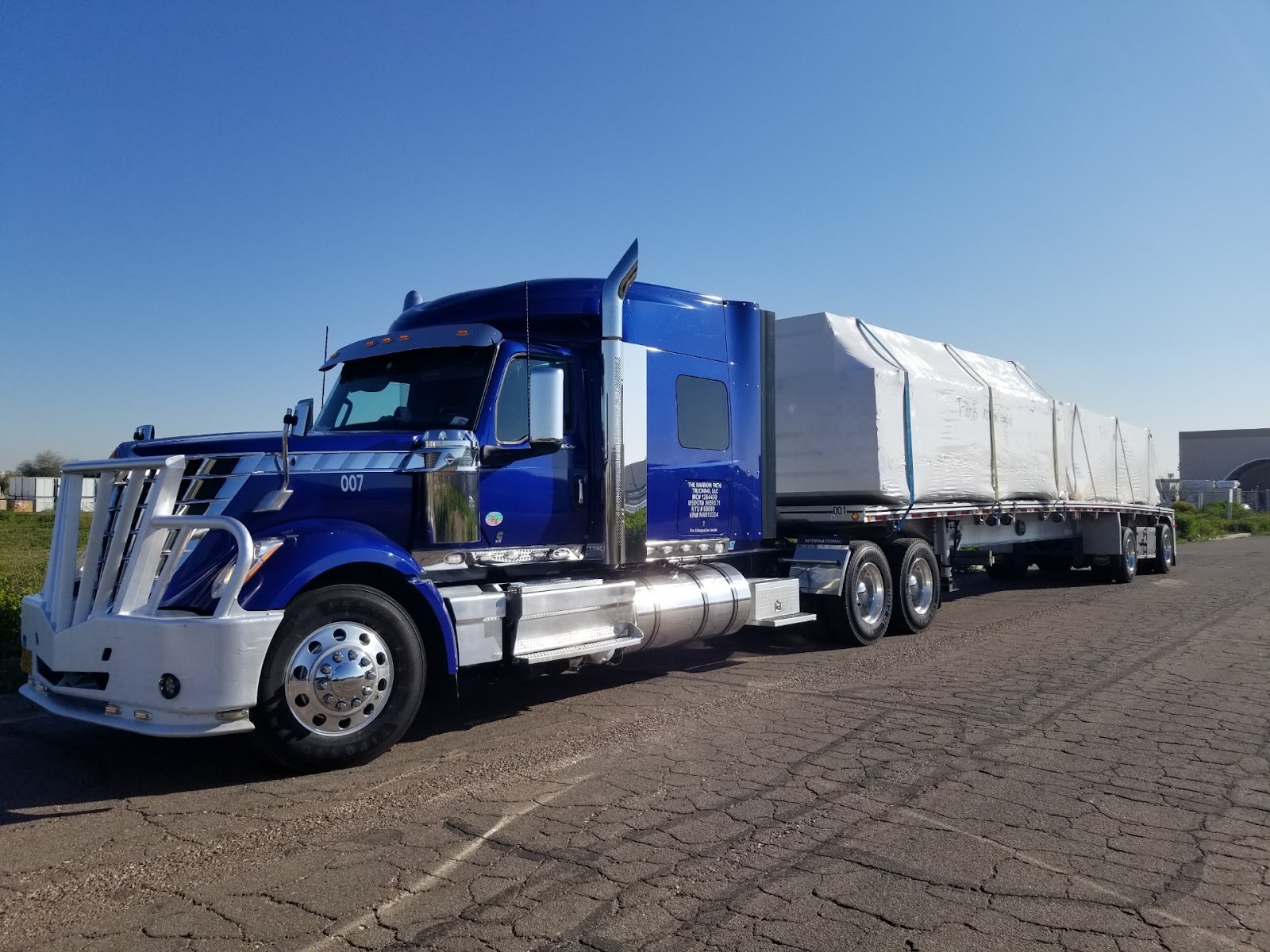
The domestic transport industry is growing fast, but the modular and offsite construction industry is growing faster. These modular units need to move from A to B on time in sequence and intact; however, the trucking and trailer manufacturing industries are experiencing some unique growing pains and finding it difficult to keep up with demand.
In this blog, we’ll share the growth rate of the modular and offsite manufacturing industry and compare it with the growth rate in the transportation industry, including the trailer industry. You’ll learn why the asymmetrical growth is creating capacity challenges nationwide, and why it’s more important than ever to find the right logistic team to guarantee success.
The US prefabricated industry is expected to grow at a CAGR of approximately 4% between 2021 – 2026. The industry has grown steadily, generating $39.6 billion in 2019, a 10% increase in revenue as compared to 2016. This data was collected by a new market study report published by Global Industry Analysts Inc.
In the US, modular construction has become very popular and is estimated to double in the next five years. This is because developers and GCs realize The Benefits of Offsite Construction. An increase in quality, a decrease in construction costs, and shortened project schedules are the three main benefits of using modular and offsite construction in the private and commercial sectors.
The cost of housing is on the rise. As a response, cities are investing in modular and prefabricated construction for multifamily residential developments. 1.29 million privately-owned housing units were built in 2019 alone, and this number continues to rise.
Non-residential construction in the US, including lodging, office, commercial, health care, and education, is expected to reach $590.4 billion in 2023.
There has been comfortable growth within the non-residential building industry. However, the construction industry faces challenges such as a shortage of skilled labor and rising material costs. Out of desperate need, this typically conservative industry is modernizing more rapidly to support customer demands and improve operations.
The prefabricated market is highly competitive, growing, efficient, and more sustainable than traditional construction methods, so there has been an increase in prefabricated construction building investments and major projects country-wide. In addition, venture capital funding, experts entering into the construction sector, technology, and continued research and development in the industry lay the foundation for continued growth ahead.
Because of the pandemic, the freight market took a big hit and is still recovering. Growth in the General Transportation segment has been readjusted to a revised 3.4% CAGR for the next 7-year period. The 2021 US macroeconomic forecast has been revised down, now at 3.1% growth in real GDP. Transportation capacity is historically low, as compared to demand, and is most evident in the truckload market, where carriers still reject one in every four loads under contract.
But the offsite construction industry is showing no signs of slowing, and the transportation industry isn’t growing fast enough to keep up with demand.
Despite challenges, the American Trucking Association (ATA) predicts that “Overall freight tonnage will grow more than 25 percent by 2030 to 20.6 billion tons— with revenues increasing 53.8 percent to $1.6 trillion. As a result, trucking will remain the dominant freight mode, hauling 68.8 percent of the total freight tonnage in 2030.”
Conditions impacting freight tonnage have not returned to the pre-pandemic pace of freight demand. According to this Ruan Industry Update, IHS Markit’s forecast of a 0.7% decline in total freight tonnage has made this year another challenging one for carriers.
Getting back to normal shipping hasn’t been easy for the trucking industry. The transportation industry is experiencing a shortage of drivers, tightened industry regulations, disruptive innovations, and evolving consumer expectations. More on the fallen truck tonnage index here.
Pair that with an increase in demand for modular and offsite construction, which requires specialty trailers and nuanced logistical considerations, and you’ve got a whole host of factors working against the smooth and consistent growth needed to keep up with transport in the modular and offsite construction industries.
Specialty trailer demand is also outpacing supply. Long delays and price increases are common, and manufacturers have felt labor and supply shortages because of COVID. Across the board, trailer manufacturers are unable to fulfill orders in their usual timeframe.
Interestingly, although the trailer and RV industries are very different, they’ve been battling for similar parts. The RV industry has seen an uptick as consumers turn to more travel and more affordable housing options. The increased manufacturing of these RVs has placed an additional strain on manufacturers looking for trailer parts.
In addition to increased lead times, sudden part changes and price increases are all too common. Recently, some vendors aren’t even providing pricing. Instead, they state that they will allocate pricing at shipment.
Naturally, manufacturers love the increase in business and demand. However, supply chain shortages are hindering them from fulfilling orders.
In April of 2021, FTR Transportation Intelligence reported that preliminary US net trailer orders of 27,400 units rose 6.4% over February and 20,700 units above the year-ago period when pandemic-induced shutdowns took hold across manufacturing.
In March of 2021, ACT Research reported preliminary orders of 29,500 new trailers, up 12% from February and more than triple the year-ago volume.
Uneven growth across related industries is creating new challenges when it comes to moving mods, pods and panels. The modular and offsite construction industry is advancing faster than transportation availability, so finding the right logistics team with a history of creative, adaptive solutions for shipping in the modular/offsite construction industry will be key for success.
To learn how Stream Modular can help you secure the right trailer with the right solution to make your next project a success, reach out!
Stream Modular is a transportation logistics company specializing exclusively in modular construction. We help modular manufacturers and builders transport mods, pods and panels so they arrive on time and safely to the build site.
Share this Article     |